
Retro-Futurism Meets Modernism: What Experiential Architecture Is Teaching Us About the Future of Design
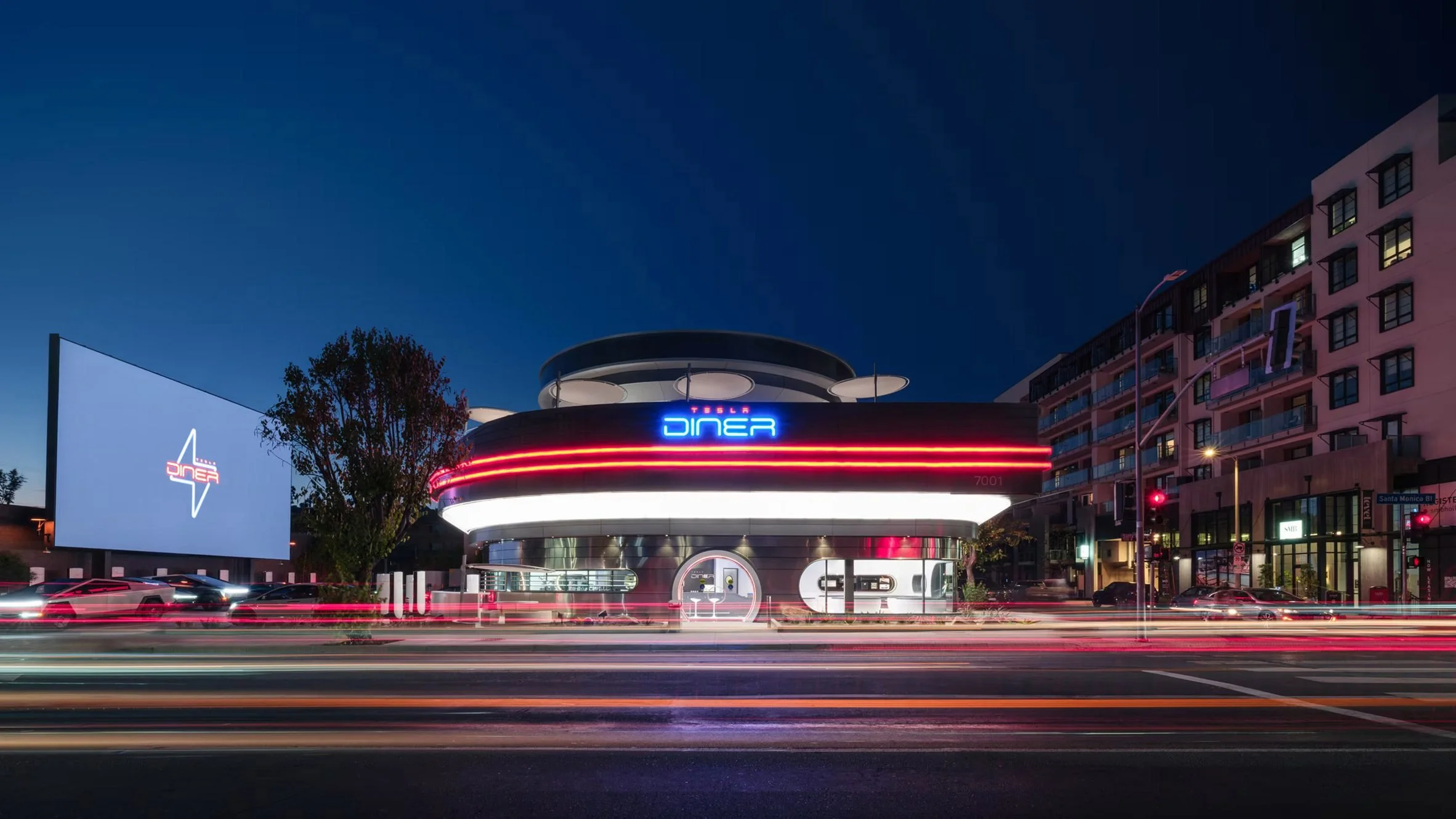
A new wave of experiential architecture is emerging, one that blends Modernist clarity with retro-futuristic optimism, creating environments that feel both familiar and forward-looking.
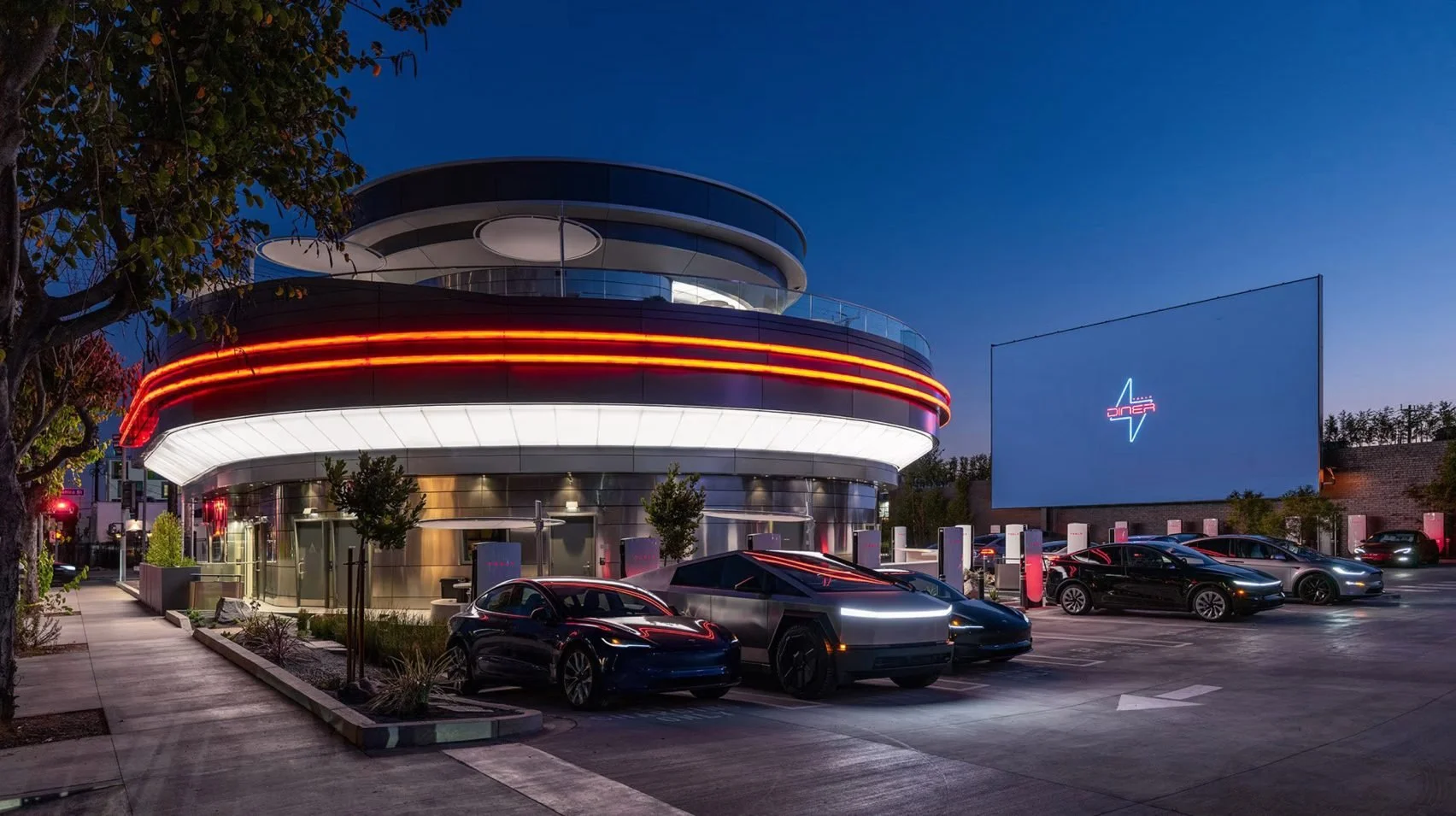
A recent high-profile example in Los Angeles illustrates this shift clearly. The Hollywood diner by Tesla isn’t designed to be a novelty stop. It’s a statement on where architecture, technology, and experience are headed. Designed as a hybrid between a supercharging station, classic American diner, and drive-in experience, the space is composed of rounded, metallic volumes stacked across two levels and connected by bands of illuminated light. The architecture is expressive but restrained, nostalgic without becoming decorative.
At its core, the space blends Modernist principles, clean lines, open volume, clarity of function, with a subtle nod to retro-futurism, echoing the optimism of classic American diners. The result feels familiar yet forward-looking, nostalgic without becoming decorative.
What makes this space compelling isn’t novelty alone. It’s integration.
Every element is assembled and engineered with intention. Infrastructure doesn’t sit in the background, it shapes the experience. Charging stations, ordering systems, media screens, and circulation paths are designed as part of a single architectural system rather than layered on afterward.
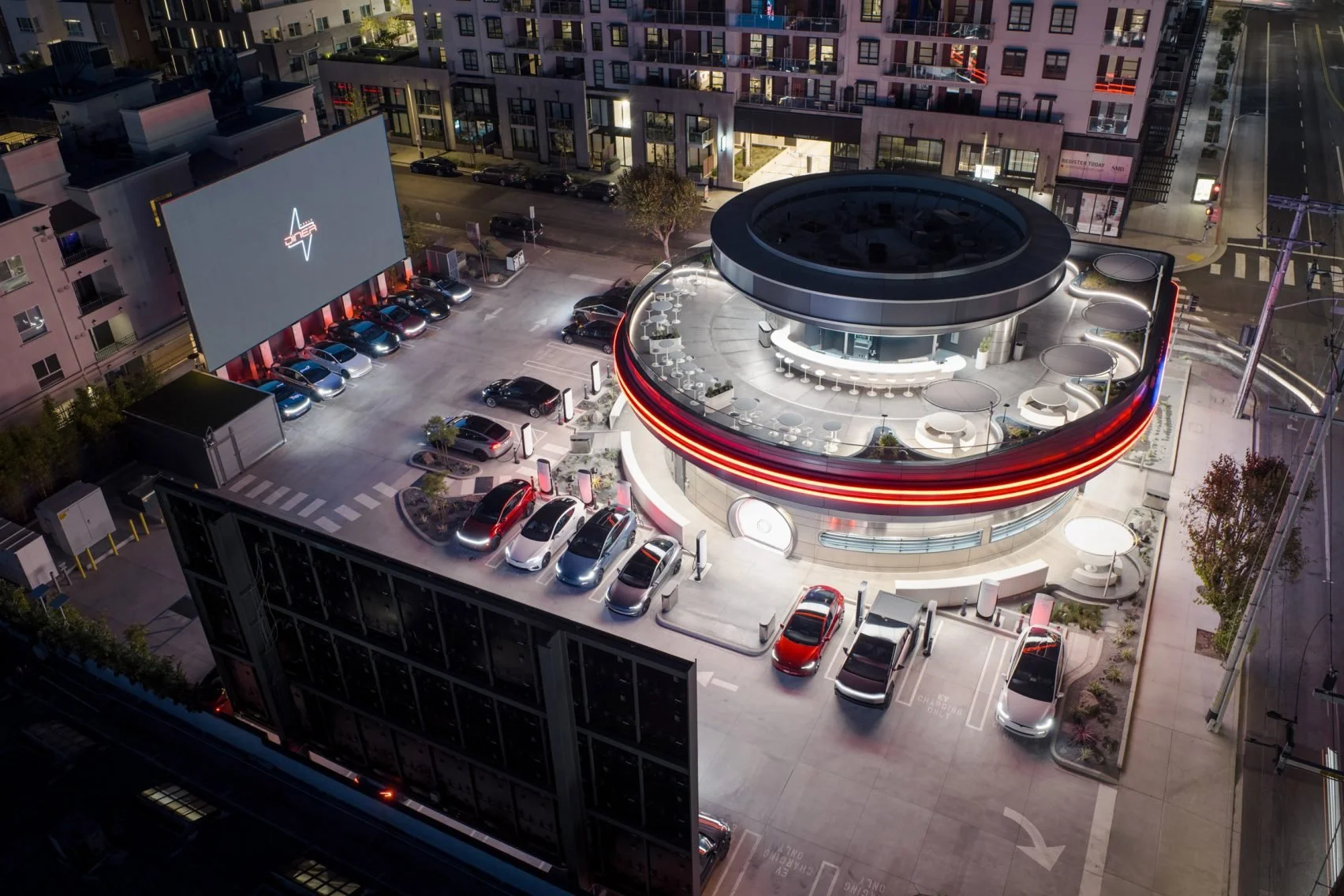
Guests aren’t simply dining. They move through a carefully choreographed environment, ordering digitally, engaging with technology, watching content from within their vehicles or elevated outdoor terraces, and circulating between levels designed with consistent material language, lighting rhythm, and spatial flow. Even small details, from packaging to seating layouts, reinforce the same design logic.
For designers, developers, and brands, the takeaway is clear. The future isn’t about styling spaces to look impressive. It’s about engineering environments that work beautifully. Spaces that anticipate behavior. Spaces that connect physical design with digital experience. Spaces that feel inevitable rather than decorated.
This is the Inspired Interiors philosophy: thoughtful design through integration, not excess.