
Veneer Isn’t a Trend. It’s Centuries of Craftsmanship
Veneer Isn’t a Trend. It’s Centuries of Craftsmanship

From time to time, certain materials suddenly appear everywhere in design conversations and get labeled as “the latest trend.” Wood veneer is one of them. In reality, veneer has been part of architectural design for centuries.
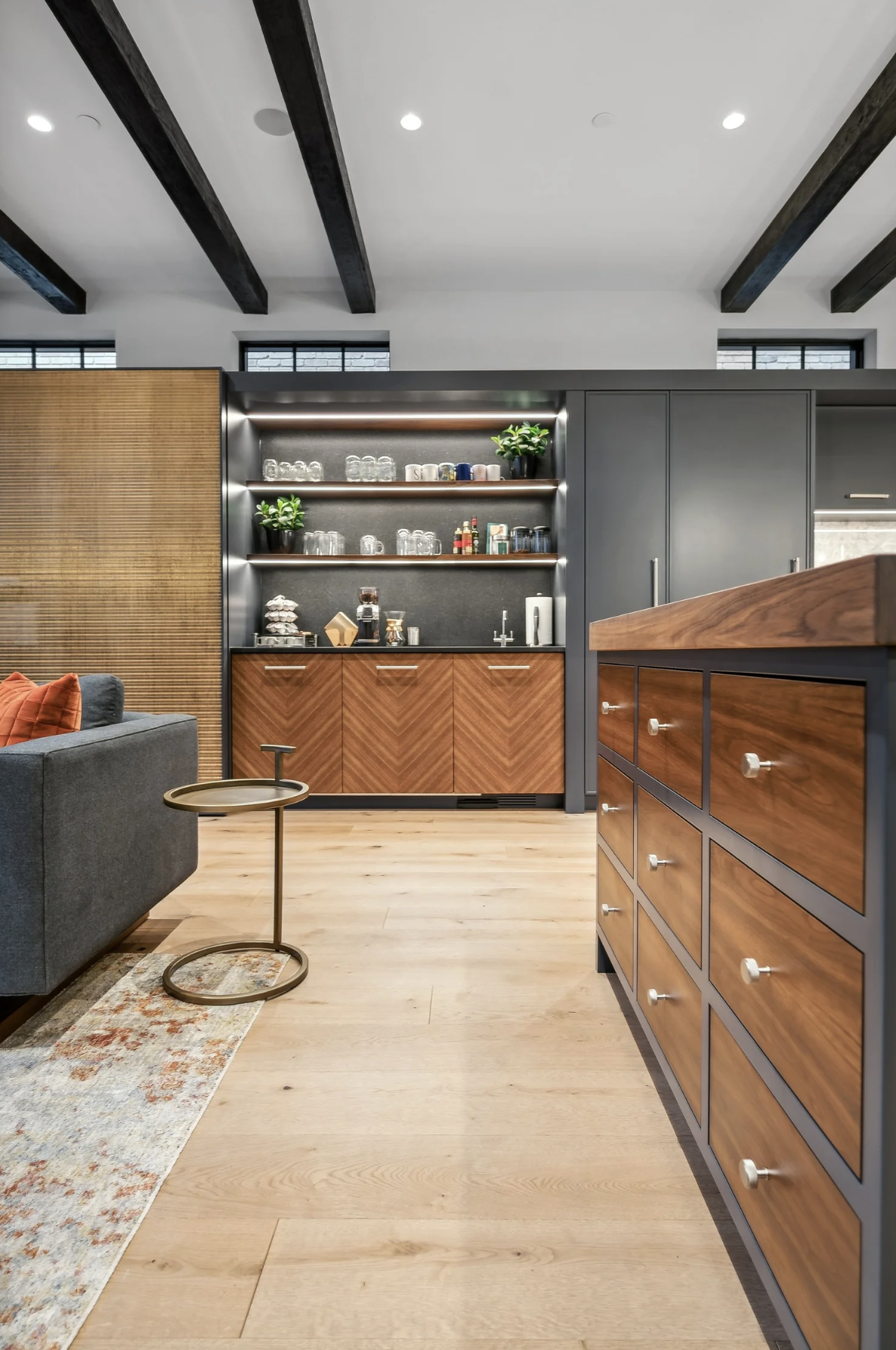
A veneer is simply a very thin slice of real wood applied to a stable surface. That thin layer allows designers to work with exotic wood species from around the world such as wenge, macassar ebony, burl, sapele and more. Designers can control how the grain flows across cabinetry, paneling, and architectural millwork. A wide array of geometric and organic patterns can be created on surfaces and furniture.
Veneer patterning is not a new design trend. Historic interiors such as the Palace of Versailles used veneers extensively in furniture and wall paneling, where craftsmen assembled thin layers of wood to create intricate surfaces and patterns.Lincoln Park Wonderland
Today, architects and interior designers continue to use veneer for a similar reason: precision. Veneers allow the grain of the wood to move consistently across large surfaces, creating wall panels, built-ins, and cabinetry that feel intentional and refined rather than random.
Modern fabrication has also introduced engineered veneers (environmentally friendly), such as those produced by Brookside Veneers. These materials offer predictable grain patterns and can be applied across large architectural surfaces while using less raw timber.
Veneer, in other words, isn’t a passing trend. It’s a long-standing architectural technique that continues to evolve with modern materials and fabrication methods.
At Inspired Interiors, veneer is often used as part of the architectural language of a space, bringing warmth, pattern, and craftsmanship into cabinetry, wall systems, and custom millwork.
To see how veneer is used in real architectural interiors, view Lincoln Park Wonderland property for additional examples of the custom veneer millwork and paneling used throughout this home.
Because good design isn’t about following trends. It’s about knowing how to use materials well.